


When a beverage reaches a store shelf, it represents two distinct milestones in the FMCG supply chain. The first is when the brand records revenue—this is sell‑in. The second is when a customer walks away with the product—this is a sell‑out. Both metrics are crucial, but they measure different stages of the product journey.
Sell‑in reflects how well the brand pushes stock into the trade. Sell‑out shows how well the market consumes that stock. Brands often focus on sell‑in to meet targets. Without tracking sell‑out, they risk misreading actual demand, leading to overstocks, stockouts, or missed opportunities.
At Hindustan Coca‑Cola Beverages (HCCB), where we manage a large and fast-moving beverage portfolio, capturing the difference between sell‑in and sell‑out helps us optimise inventory, monitor execution closely, and build more responsive demand systems. This article explains both concepts, how they interact, and why each matters.
What Sell‑In Really Means
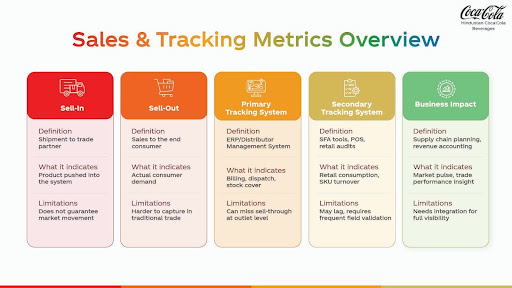
Sell‑in is the volume of product a manufacturer sells to its distribution partners, be it distributors, stockists, or wholesalers. This is the point where revenue is recorded.
Sell‑in matters because it reflects:
- Inventory pushed into the trade network
- Brand’s execution effectiveness in the field and logistics
- Distributor activation levels and scheme uptake
- Alignment between production and expected upstream demand
Even though sell‑in data provides valuable insight into supply dynamics, it does not indicate whether the product moved through to the consumer.
What Sell‑Out Really Means
Sell‑out refers to the movement of products from retail outlets to consumers. This is the true measure of market acceptance.
Sell‑out reveals:
- Consumer preferences and SKU performance
- Product movement velocity at retail level
- Effectiveness of promotions and visibility
- Regional or channel-specific traction
Sell‑out is harder to track in fragmented markets. Modern trade and e‑commerce offer clearer data. In traditional trade, brands rely on field sales visits, audit tools or SFA inputs for visibility.
Comparing Sell‑In and Sell‑Out
Using Both Metrics to Shape Strategy
Brands can use sell‑in and sell‑out together to drive smarter business decisions:
- Optimising Inventory Locations: Use sell‑out trends in specific zones to decide manufacturing shift priorities and planning.
- Adjusting Launch Timelines: Monitor early sell‑in vs sell‑out discrepancies to pivot campaign execution quickly.
How Digital Tools Make Tracking Possible
Tools are evolving to support real-time tracking:
- ERP / DMS systems: Capture sell‑in for billing and stock cover tracking.
- SFA mobile apps: Enable field teams to capture order repeat, display, and outlet visibility manually.
- Retail earning or ordering apps: Brand-led retailer platforms to capture real-time sell‑out or stock movement.
- Geo‑tagged merchandising reports: Document shelf presence, rotation and expiry alignment.
- Dashboard analytics: Overlay sell‑in data against sell‑out to flag hotspots for intervention.
When data is unified, brands gain operational clarity. They can respond faster to both opportunities and challenges.
Building Retailer and Distributor Trust Through Alignment
When brands align sell‑in and sell‑out metrics:
- Distributor relationships become more balanced
- Retailers see benefits from shelf movement, not just stocking
- Consumers get better product availability and freshness
- Sales teams reinforce order discipline along with recovery
- Marketing teams can connect campaign impact to actual sell‑out performance
When the system acknowledges both sides of the trade, performance becomes clearer, and trade partnerships grow stronger.
Why This Gains Importance Now
The retail mix is changing rapidly. Modern trade, e‑commerce platforms, and direct-to-home deliveries have made sell‑out insights more accessible. Consumers expect immediacy and visibility. Budgets increasingly shift toward SKUs and outlets that deliver results.
Brands that rely purely on sell‑in metrics risk over-investing in slow-moving stock, missing demand spikes, or failing to localise tactics based on real retail behaviour.
Tracking both metrics helps brands invest in emerging trends, identify growth corridors early, and scale what works in the field.
Balanced Sales Insights Build Resilient Brands
Sell‑in and sell‑out represent two halves of the FMCG equation: supply and demand. A brand that monitors both in tandem gains operational fluency. It understands where inventory sits, what consumers prefer, and how to make data-driven decisions quickly and precisely.
Strong brands in highly competitive industries such as beverages use this distinction not just to measure performance but also to manage partners, support markets, and deliver consistent brand experiences.
Sell‑in and sell‑out are not substitutes. They are complements. Together they create clarity, efficiency and trust across the trade ecosystem.

Comments