



Every time a retailer opens a case of beverages or pulls a juice pack from the shelf, the quality of the consumer experience depends on one practice working behind the scenes: stock rotation. It may not be visible to shoppers or reflected in sales reports, but it shapes how brands deliver freshness and manage inventory effectively.
At Hindustan Coca-Cola Beverages (HCCB), managing stock rotation is a core operational discipline. With a wide portfolio of beverages moving through diverse retail and distribution channels, we treat rotation not just as a backend process, but as a frontline measure to protect freshness, maintain brand trust, and ensure regulatory compliance.
Understanding Stock Rotation
At its simplest, stock rotation is the practice of moving products so that older stock sells before newer stock. This approach helps protect against inventory obsolescence.
In FMCG, two methods dominate:
- FIFO (First In First Out) ensures the products received earliest are sold first.
- FEFO (First Expiry First Out) prioritises items with the nearest expiry date.
Stock rotation is not just a warehouse concept. It should stretch across the value chain, from manufacturing to retail displays. Proper rotation creates alignment between what is shipped and what sells.
Why Stock Rotation Matters in FMCG
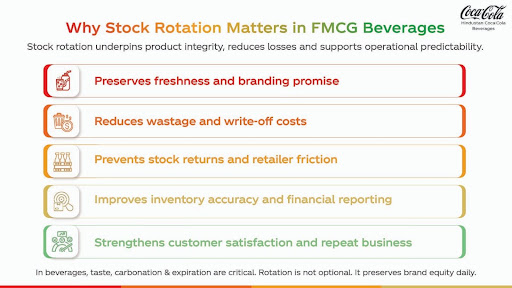
How Stock Rotation Works Across the Supply Chain
At the Manufacturer Level
- Products are tagged with batch codes, manufacturing dates and expiry dates before dispatch.
- ERP or warehouse systems schedule picklists so older batches are loaded first.
- Orders dispatched follow a planned rotation sequence
- Distribution schedules may segment deliveries by seasonal demand.
At the Distributor Level
- Warehouses are laid out so that inbound goods feed stock sections.
- FIFO pick zones are monitored by supervisors or digital scans.
- Audit cycles spot check compliance and handling standards.
- When bulk or promo stock arrives, older stock is cleared first to maintain rotation discipline.
At the Retail Outlet
- Merchandisers and store staff refresh displays by moving front-facing items to the back after sell-through.
Best Practices to Improve Stock Rotation
Brands can reinforce rotation discipline with these practical steps:
- Train distributor and retail staff on rotation principles (FIFO and FEFO)
- Use visible date labels or stickers that staff can identify easily
- Conduct regular warehouse audits to check rotation compliance
- Tie trade schemes or retailer rewards to stock movement cycles, not just volume
- Schedule merchandising visits to reset shelves and rotate stock proactively
- Run spot-checks using mobile apps to confirm FIFO compliance in hotspots
The Role of Technology in Supporting Rotation
Digital tools now support structured rotation across trade:
- Warehouse systems generate picklists that prioritise older batches
- DMS links batch codes with deliveries, enabling distributors to track shelf life
- SFA apps used by sales teams capture display conditions and stock age at the outlet level
- Dashboards track rotations by region and SKU, highlighting high-age inventory
- Mobile photo reporting enables merchandisers to show the correct shelf setup and loading order
How HCCB Incorporates Stock Rotation
At HCCB, stock rotation is baked into every step:
- Distributors follow warehouse layout guidelines focused on rotation zones
- Merchandisers receive rotation audit tasks for outlets in their tours
- Trade promotions align launch timelines with rotation windows
This structured approach ensures beverages remain fresh, merchandise remains compliant and downstream rotation discipline stays consistent.
A Quick Snapshot of Why Stock Rotation Drives Operational Success
Together, these practices help reduce waste, improve product availability and strengthen operational efficiency. Measuring these outcomes through ROI calculation in FMCG can help brands understand the broader business value of effective stock rotation.
Rotation Focus | Operational Benefit | Business Impact |
Warehouse pick order | Ensures first in stock moves first out | Avoids write-offs |
Retail shelving setup | Stock is always accessible to consumers | Improves product freshness and trust |
Regular audits | Identifies lagging SKUs and compliance issues | Reduces retailer complaints and returns |
FIFO/FEFO discipline | Matches product usage with consumer demand cycles | Minimises waste, maximises shelf uptime |
Integrated tech tools | Signals and dashboards enforce rotation across chain | Creates transparency and faster resolution |
Rotation as Brand Discipline
Stock rotation is more than logistics detail. It is a brand promise. It reassures trade partners, ensures freshness for consumers and maintains the longer-term efficiency of the supply network.
For any FMCG brand—especially those managing beverages—stock rotation serves as operational hygiene and strategic anchor. When rotation works across manufacturing, warehousing, distribution and retail, every bottle carries the brand promise intact from shelf to sip.

Comments